


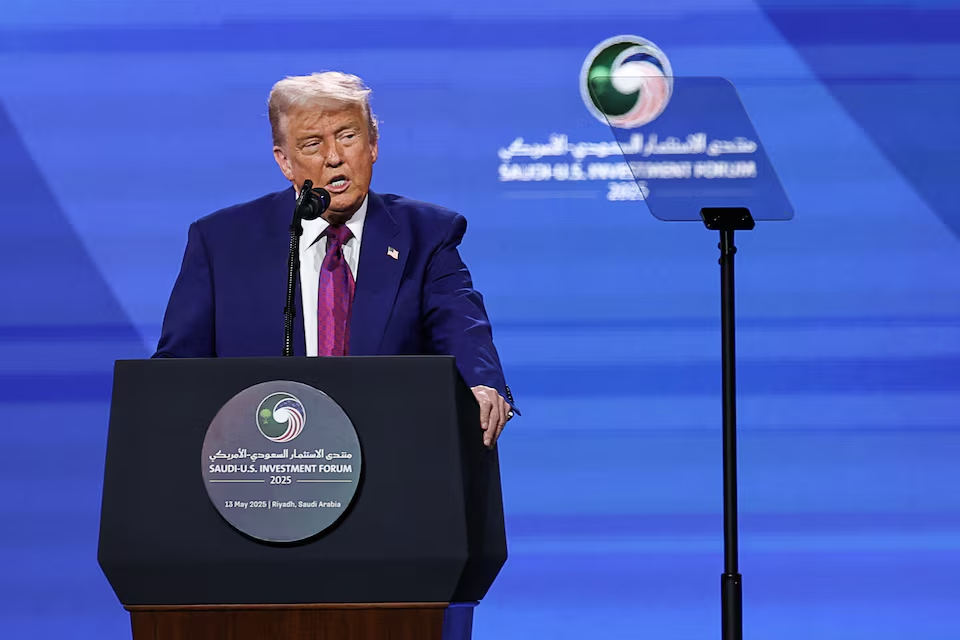
US President orders complete removal of economic restrictions ahead of historic meeting with Syrian Islamist leader
In a stunning foreign policy reversal, US President Donald Trump declared on Tuesday that he would lift all sanctions against Syria, a dramatic shift that comes at the urging of Saudi Arabia and ahead of an unprecedented meeting with Syria’s Islamist President Ahmed al-Sharaa.
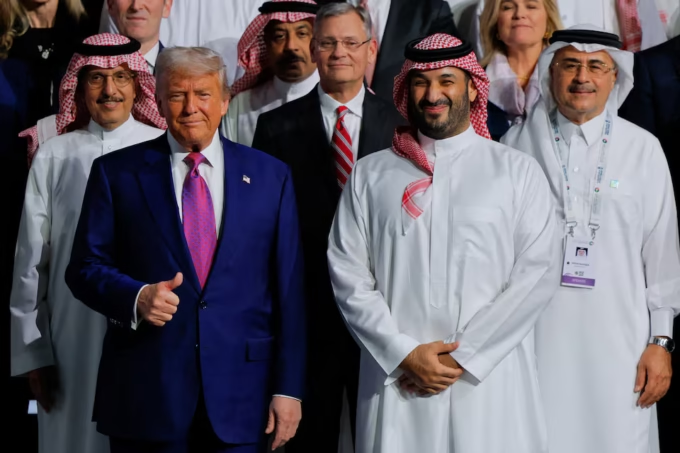
Speaking at an investment forum in Riyadh during his tour of Gulf Arab states, Trump made the unexpected announcement: “I will be ordering the cessation of sanctions against Syria in order to give them a chance at greatness. It’s their time to shine. We’re taking them all off. Good luck Syria, show us something very special.”
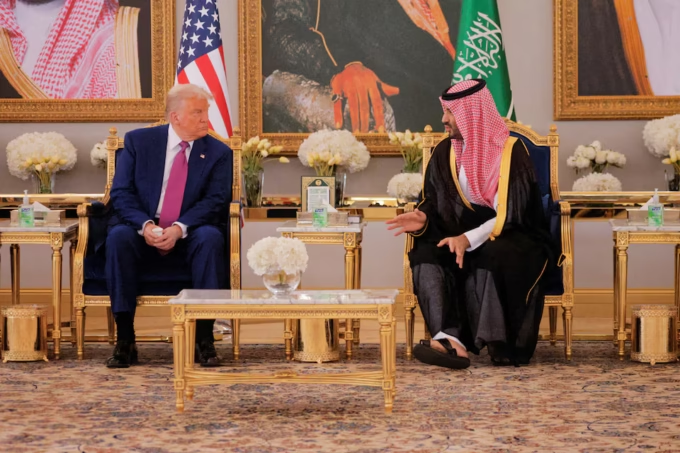
The decision marks a complete reversal of longstanding US policy toward Syria, where a brutal civil war has raged for over a decade following the uprising against former President Bashar al-Assad. Trump indicated the policy shift came after discussions with Saudi Crown Prince Mohammed bin Salman and Turkish President Tayyip Erdogan, both of whom have advocated for removing the economic restrictions.
White House officials confirmed that Trump is scheduled to meet with Sharaa on Wednesday morning in Saudi Arabia, establishing the first direct contact between a US president and the former al-Qaeda commander who assumed power after Assad’s fall. Sharaa, who led al-Qaeda’s official wing in the Syrian conflict for years, severed ties with the terrorist organization in 2016, though Israeli officials continue to describe him as a jihadist.
The lifting of sanctions is expected to have immediate economic implications, reconnecting Syria to the global financial system and potentially unlocking humanitarian aid, foreign investment, and trade opportunities as the devastated country attempts to rebuild. US Secretary of State Marco Rubio is slated to meet with his Syrian counterpart this week to begin normalizing relations.
Syrian Foreign Minister Asaad al-Shibani responded positively to Trump’s announcement, calling it “a turning point for the Syrian people in their efforts to rebuild” and expressing readiness to foster a relationship with the United States “rooted in mutual respect, trust and shared interests.” Shibani suggested that Trump could achieve a “historic peace deal and victory for US interests in Syria,” though he did not elaborate on specifics.
The policy shift comes despite ongoing regional tensions. Israel’s military currently occupies Syrian territory near the Golan Heights and continues to conduct regular airstrikes within Syria. Israeli officials, who have expressed deep suspicion of Sharaa’s administration, had not responded to requests for comment at the time of reporting.
The decision represents a significant diplomatic victory for Sharaa, who faces substantial challenges in bringing the fractured country under Damascus government control. These difficulties were highlighted in March when Assad loyalists attacked government forces, triggering retaliatory violence in which Islamist gunmen killed hundreds of Alawite civilians, an incident that drew strong US condemnation.
Reactions from Washington have been cautiously positive across the political spectrum. Democratic Senator Jeanne Shaheen, who leads the Senate Foreign Relations Committee, emphasized the opportunity to support both Syria and neighboring Lebanon while keeping Iran and Russia’s influence at bay. Republican Senator Lindsey Graham indicated he was “very inclined” to support sanctions relief under appropriate conditions, describing Syria’s new government as potentially “a good investment” that could lead to regional stability.
The United Nations, which has advocated for lifting sanctions to aid Syria’s recovery, welcomed the development. UN spokesperson Stephane Dujarric noted the importance of sanctions relief “to help the reconstruction of Syria, to help the Syrian people recover from more than a decade of conflict, a decade of under investment.”
As the Middle East landscape continues to evolve, Trump’s dramatic policy shift represents one of the most significant changes in US approach to the region in years, with potential consequences that will reshape regional alliances and power dynamics for years to come.


Leave a comment