


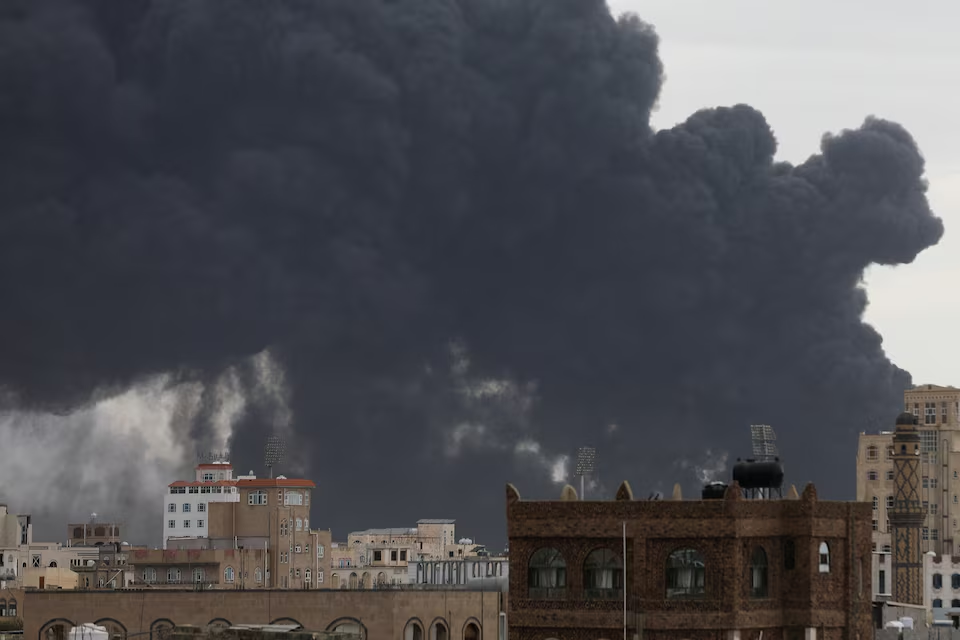
Latest Attack Follows Warning to Evacuate as Regional Conflict Escalates
Israel launched multiple airstrikes against Yemen’s main airport in Sanaa on Tuesday, marking a significant escalation in its military campaign against the Iran-aligned Houthi rebels who have been targeting Israeli territory and international shipping lanes for months.
The Israeli military confirmed it had conducted the operation after issuing evacuation warnings for people in the vicinity of Sanaa International Airport. The strikes came just one day after Israel bombed Yemen’s Hodeidah port, an attack that reportedly killed four people and wounded 39 others according to the Houthi-run health ministry.
“Not evacuating puts you in danger,” the Israeli military warned in its notice to civilians, accompanied by a published map highlighting danger zones around the airport.
Airport sources revealed to Reuters that Tuesday’s precision strikes targeted three civilian airplanes, the departures hall, the runway, and a military air base under Houthi control. There was no immediate information about casualties from the latest attacks.
This rapid escalation follows Sunday’s Houthi missile launch that landed near Israel’s Ben Gurion Airport, Israel’s primary international gateway. That attack prompted European and American airlines to cancel flights and drew a stern vow of retaliation from Israeli Prime Minister Benjamin Netanyahu.
The exchange represents the most direct and intense military confrontation yet between Israel and the Houthis, who control large portions of Yemen, including the capital Sanaa. The Houthi movement has been firing missiles and drones at Israel since the Gaza war began in October, declaring their actions as expressions of solidarity with Palestinians.
In a significant development on Sunday, the Houthis announced they would impose a “comprehensive” aerial blockade on Israel by repeatedly targeting its airports, signaling their intent to expand operations beyond shipping disruptions in the Red Sea.
The targeting of major transportation infrastructure on both sides—Israel’s Ben Gurion Airport and Yemen’s Sanaa Airport—suggests a dangerous new phase in the conflict that risks drawing in regional powers and further destabilizing critical maritime and air corridors essential for global commerce.
The strikes come amid broader regional tensions, with Israel fighting multiple fronts simultaneously: against Hamas in Gaza, Hezbollah in Lebanon, and now the Houthis in Yemen. These Yemen operations mark Israel’s furthest military reach from its borders in the current Middle East conflict, highlighting the expanding geographic scope of hostilities.
International observers express growing concern that the widening conflict could severely impact humanitarian conditions in Yemen, already suffering from years of civil war that has created what the United Nations describes as one of the world’s worst humanitarian crises.








Leave a comment