


The long-standing geopolitical rivalry between India and Pakistan has once again erupted into a dangerous military confrontation—this time driven by high-tech drone and missile warfare. As of May 8, 2025, both nations have traded aerial strikes and issued stern warnings of retaliation, sparking alarm across global diplomatic circles. With both countries in possession of nuclear weapons and a history of bitter wars, the unfolding conflict is rapidly transforming into the most severe escalation in over two decades.
Origins of the Escalation: Kashmir at the Center Once More
The latest crisis traces back to a deadly attack on April 22, 2025, in Indian-administered Kashmir. New Delhi blames Pakistan for sponsoring the attack, accusing Islamabad of supporting militant groups operating in the region. In retaliation, India launched strikes on May 7 against what it claims were “terrorist infrastructure” sites within Pakistani territory.
Pakistan, however, has vehemently denied any involvement in the April 22 attack. Islamabad insists that the locations hit by India were not militant bases, but rather civilian areas—accusing India of committing cross-border aggression without justification. This marked the beginning of a dangerous tit-for-tat exchange between the two arch-rivals.
Drone Warfare Takes Center Stage
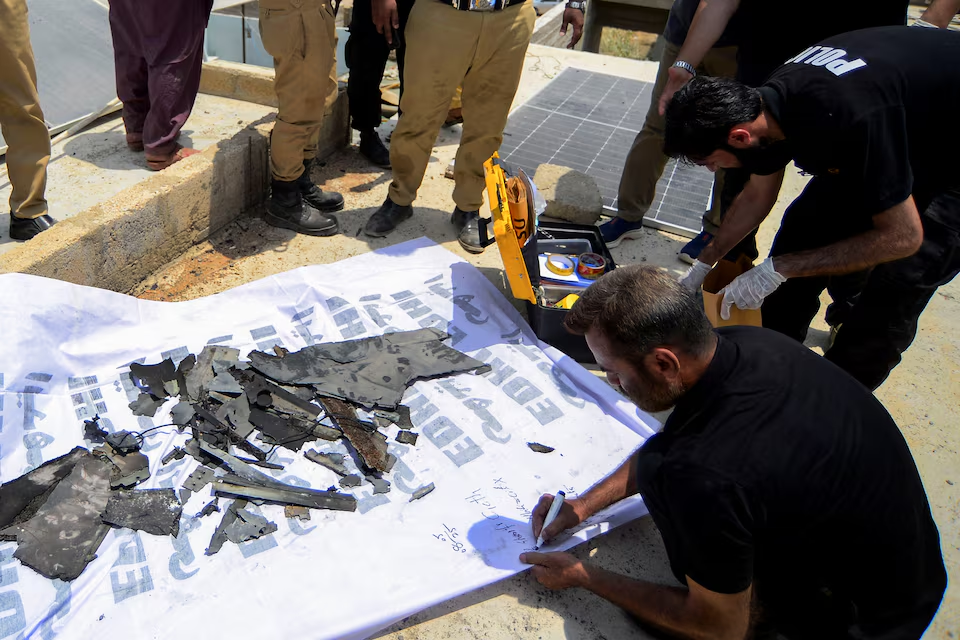
On May 8, Pakistan’s military reported it had shot down 25 Indian drones, including Israeli-made models, which had entered Pakistani airspace. The drones were reportedly intercepted over major cities such as Karachi, Lahore, and even Rawalpindi, which houses Pakistan’s military headquarters. At least one drone strike near Lahore reportedly injured four Pakistani soldiers.
Pakistan’s military spokesperson, Major General Ahmed Sharif Chaudhry, condemned India’s use of drones as a blatant act of aggression, warning that India “will continue to pay dearly” if such actions persist. The targeting of key military installations in Pakistan’s heartland marks a significant escalation in both scope and technological sophistication.
Meanwhile, the Indian Ministry of Defence claimed that Pakistan had launched drone and missile attacks against Indian military sites in northern and western India. These attacks, according to India, were intercepted and neutralized by Indian air defence systems. India then launched further strikes against Pakistani air defence systems in retaliation, describing its response as being “in the same domain with the same intensity.”
Civilian and Military Casualties on Both Sides
The aerial exchanges and cross-border shelling have inflicted heavy losses on civilians and heightened the human cost of the conflict. According to Pakistan, at least 31 civilians have been killed and around 50 injured due to Indian strikes and shelling along the Line of Control (LoC) in Kashmir. India, on the other hand, reports 13 civilian deaths, including women and children, and 59 injuries.
Indian authorities claim that their strikes have killed more than 100 militants, while Pakistan’s Information Minister claims that Pakistani forces have killed 40 to 50 Indian soldiers and destroyed Indian military installations along the de facto border.
Such conflicting narratives are common in Indo-Pak conflicts, and Reuters has been unable to independently verify the casualty figures reported by either side.
Economic Shockwaves and Civilian Panic
The military developments have quickly translated into financial instability. Pakistan’s benchmark KSE-100 index plunged 6.3%, triggering a halt in trading. The country’s international bonds have also taken a hit, with the 2036 bond dropping significantly.
In India, the Nifty 50 stock index fell by 0.58%, marking its most volatile day in a month. The Indian rupee weakened, and bond yields rose in response to rising geopolitical risks. These market tremors underline how military tensions in South Asia have a direct impact on investor confidence, currency markets, and economic stability.
Reports from Punjab—a border state in India—indicate widespread panic buying, as residents fear further escalation and potential war. Blackout drills were carried out in border districts, preparing for the worst-case scenario.
Global Reactions: Calls for Calm from World Powers
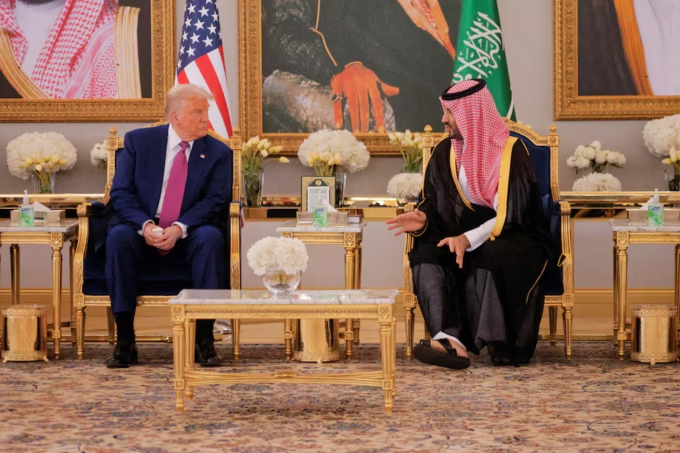
In response to the growing crisis, global powers including the United States, China, and Russia have issued urgent calls for restraint. The U.S. Consulate General in Lahore has asked its personnel to shelter in place, signaling the seriousness of the threat.
Despite these international concerns, both Indian and Pakistani leaders remain locked in a cycle of retaliation. Indian Foreign Minister Subrahmanyam Jaishankar has said that while India does not wish to escalate the conflict, any military attack on Indian soil will be met with a “very, very firm response.”
Pakistani Foreign Minister Ishaq Dar indicated that communication lines between the military leadership of both countries are open, including contacts between their national security advisors. However, no formal de-escalation agreements have emerged so far.
Strategic Concerns: Escalation in the Nuclear Shadow
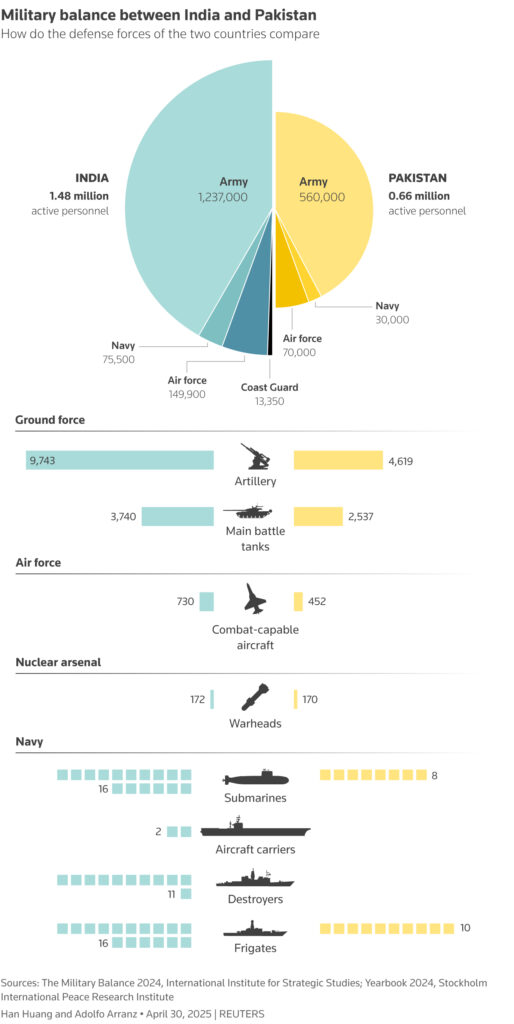
This conflict marks a notable shift from traditional artillery skirmishes and insurgent activity to advanced drone warfare, posing new challenges for both military strategy and crisis diplomacy. The urban targeting of cities like Lahore and Rawalpindi with military drones represents a provocative expansion of the battlefield, bringing the conflict deeper into sovereign territory.
Most critically, both countries possess nuclear weapons and have not ruled out military retaliation. With domestic political pressure rising in both nations and public outrage fueling nationalist sentiment, the possibility of miscalculation looms large.
Conclusion: A Crossroads for South Asia
India and Pakistan are once again at a critical juncture. While both sides claim to act in self-defense, the pace of escalation, growing civilian casualties, and the use of high-tech military systems suggest that the region is teetering on the edge of a much broader war. The nuclear dimension of this conflict places immense responsibility on both governments to de-escalate before it is too late.
The international community must intensify diplomatic engagement to defuse tensions, and both India and Pakistan must prioritize dialogue, transparency, and strategic restraint. History has shown that there are no winners in a South Asian war—only deepened divisions, economic devastation, and widespread human suffering.
The coming days will be critical in determining whether this flashpoint is resolved through diplomacy or descends further into destruction.




Leave a comment