


U.S. President Donald Trump blindsided Israeli Prime Minister Benjamin Netanyahu with his decision to immediately open negotiations with Iran last month. Now, the talks hinge on winning key concessions that would prevent the Islamic Republic ever developing a nuclear bomb, according to eight sources familiar with the matter.
The pivot to negotiations with Iran in April came as a shock for Netanyahu, who had flown to Washington seeking Trump’s backing for military strikes on Iran’s nuclear facilities. The Israeli leader learned less than 24 hours before a joint White House press event that U.S. talks with Iran were starting within days, four sources told Reuters.
Tehran’s leadership remains deeply concerned that Netanyahu may launch a strike – deal or no deal, a senior Iranian security official said.
Swift progress in negotiations
In just three weeks, the U.S. and Iran have held three rounds of talks aimed at preventing Tehran from building a nuclear weapon in return for sanctions relief. A fourth round is expected to take place in Rome soon.
An initial framework under discussion preserves the core of the 2015 Joint Comprehensive Plan Of Action (JCPOA) – which Trump scrapped in 2018 during his first term, according to eight sources. While a new deal may not look radically different from the former pact, which Trump called “the worst in history,” it would:
- Extend duration to 25 years
- Tighten verification measures
- Expand so-called sunset clauses that pause but don’t completely dismantle aspects of Iran’s nuclear program
Under the terms being discussed, Iran would:
- Limit stockpile size and centrifuge types
- Dilute, export or seal its 60 percent uranium stock under unprecedented International Atomic Energy Agency (IAEA) scrutiny
- All in exchange for substantial sanctions relief
Dennis Ross, a former negotiator under both Republicans and Democrats, said that any new agreement must go further than the JCPOA by imposing a permanent, structural change in Tehran’s nuclear capabilities – shrinking its infrastructure to the point where developing a bomb is no longer a practical option.
“Anything less would leave the threshold threat intact,” he told Reuters.
Red lines and sticking points
Several red lines are emerging that negotiators will have to circumvent to reach a deal and avert future military action.
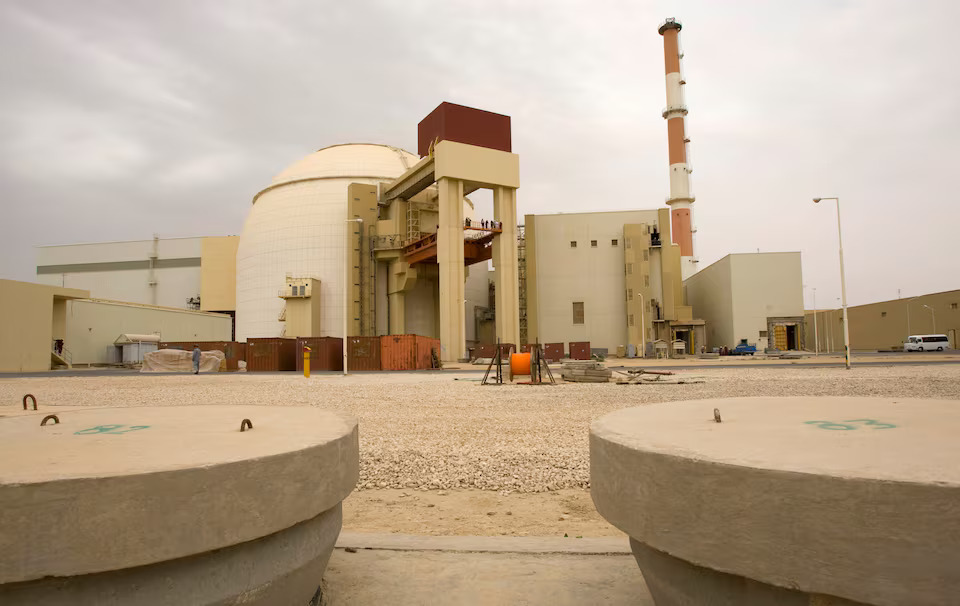
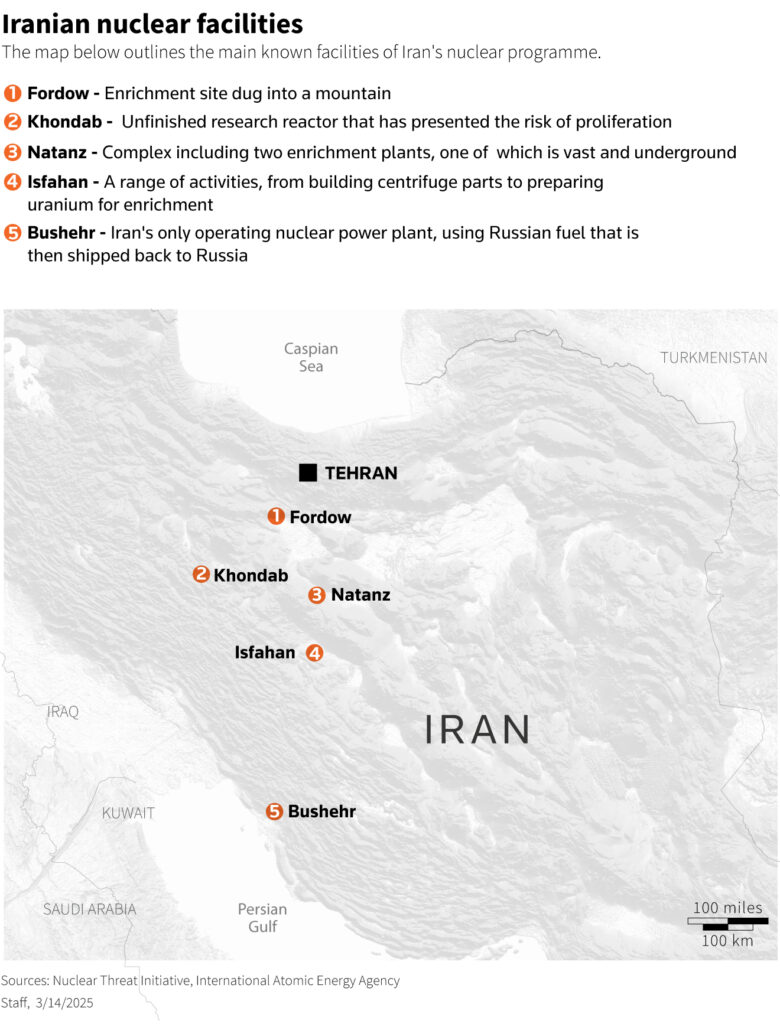
Foremost is the question of Iran’s capacity to enrich uranium, something Washington and Israel say must stop entirely, leaving Iran reliant on imported uranium for Bushehr, its only existing nuclear power plant, located on the Gulf coast.
Netanyahu is demanding “zero enrichment” and a Libya-style deal that dismantles Iran’s nuclear infrastructure completely.
Iran says its right to enrich is not negotiable. However, the size of the uranium stockpile, shipping stocks out of the country, and the number of centrifuges are under discussion, three Iranian officials said.
Under proposals discussed in April, Iran would cap enrichment at 3.67%, in line with the JCPOA. Tehran is also open to granting the IAEA expanded access to its nuclear sites, the Iranian sources said.
U.S. Middle East envoy Steve Witkoff appeared to acknowledge that position in comments last week, but later said Iran must “stop and eliminate” enrichment.
Possible compromises
One way out could be for Iran to accept long breaks to the enrichment program, through an extension of sunset clauses, said Alex Vatanka, a senior fellow and the founding director of the Iran program at the Middle East Institute in Washington.
“The Iranians, if they were smart, they would settle for much longer sunset clauses going into the future,” Vatanka said, emphasizing the importance of each side being able to claim victory in the talks.
Another possible compromise could involve Iran retaining minimal enrichment, with 5,000 centrifuges, while importing the rest of the enriched uranium, possibly from Russia, one senior Iranian security official told Reuters.
In return for limits on enrichment, Tehran has demanded watertight guarantees Trump would not again ditch a nuclear pact, according to three Iranian officials.
Tehran’s position
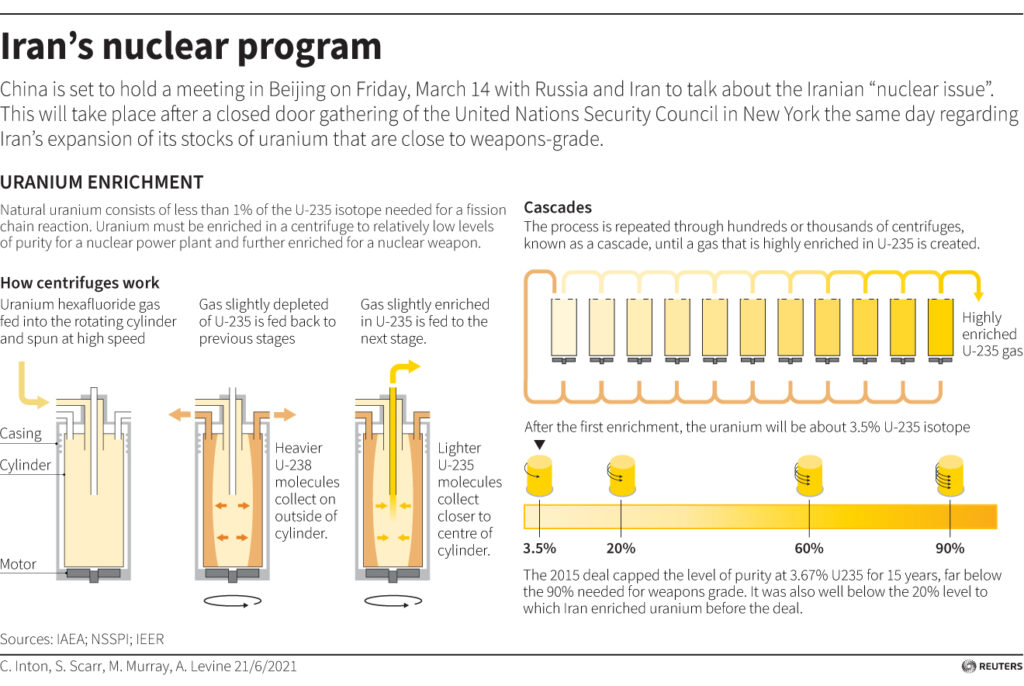
Among the red lines mandated by Supreme Leader Ayatollah Ali Khamenei is reducing the amount of enriched uranium it stores to below the level agreed in the 2015 deal, sources said. Iran has been able to “significantly” increase the amount of uranium it can enrich to 60% purity, the IAEA said in December.
The JCPOA only permitted Iran to accumulate enriched uranium produced by its first generation IR-1 centrifuges, but now Iran is using far more advanced models banned under the 2015 deal.
A senior regional source close to Tehran said the current debate over Iran’s uranium stockpiles centers on whether Iran “will keep a portion of it – diluted – inside the country while sending another portion abroad, possibly to Russia.”
According to the source, Iran has even floated the idea of selling enriched uranium to the United States.
Iran currently operates around 15,000 centrifuges. Under the JCPOA, Iran was allowed to operate around 6,000.
“Essentially, the negotiations are shaping into a ‘JCPOA 2’ with some additions that would allow Trump to present it as a victory, while Iran could still keep its right to enrichment,” a senior Iranian official said.
Missile program concerns
Another sticking point relates to Iran’s ballistic missile manufacturing capacity. Washington and Israel say Iran should stop making missiles. Iran counters that it has a right to self-defense. One Iranian official previously told Reuters it would not go beyond the requirements of the 2015 deal, offering only to avoid building missiles capable of carrying nuclear warheads as a “gesture of goodwill.”
Washington is pressing to include the ballistic missile program in the talks, but Tehran “continues to reject any discussion,” said one regional security official. “The problem,” he added, “is that without addressing the missile issue, Trump cannot claim that the new deal goes beyond the JCPOA.”
Former negotiator Ross points out the contradiction: Trump abandoned the JCPOA for being too weak, and as a result now faces a reality where Tehran stands at the threshold of nuclear weapons capability.
“Accepting a deal that mirrors or softens the original would be politically indefensible,” he said, suggesting a deal must slash centrifuges from 20,000 to 1,000, ship out all enriched stockpiles, and impose intrusive, penalty-backed inspections.
Risk of Israeli strike remains
Vatanka likened Iran’s current predicament to the 1988 decision by the regime’s founder Ruhollah Khomeini to accept a ceasefire with Iraq – a moment he famously likened to drinking “the bitter chalice of poison.”
“It’s about survival,” Vatanka said. “It’s not capitulation.”
Diplomats say Netanyahu sees a rare opening: last year’s military campaigns crippled Iran’s air defenses and decimated Hezbollah’s missile arsenal – Tehran’s primary deterrent.
“This is a historic window for Israel to strike Iran’s nuclear sites,” said an official in the Middle East. The United States, he said, opposes such a move for several reasons – chief among them the concerns of Gulf Arab states, which Washington cannot ignore given its deep strategic and economic ties in the region.
“Still, it must weigh Israel’s security calculations,” he said. “So while the U.S. may not take part directly, it could offer indirect support. It would be a difficult operation for Israel – but not an impossible one.”
The U.S. military has surged assets in recent weeks to reinforce the Middle East. The Pentagon has deployed six B-2 bombers to the Indian Ocean island of Diego Garcia – a location used in the past to support its military operations in the Middle East.
Additionally, the U.S. currently has two aircraft carriers in the region and has moved in air defense systems from Asia.
Alan Eyre, a former U.S. diplomat and Farsi-speaking Middle East expert, warned that a strike may slow Iran’s program, but won’t eliminate it. “You cannot bomb know-how,” he said. “The knowledge is there. Iran has mastered uranium enrichment.”




Leave a comment